
01Context
Turnout gear has a life. NFPA 1851 sets the rules for how protective ensembles are inspected, cleaned, repaired, and retired, and OSHA expects a department to be able to prove it followed them. For a chief, that means knowing the state of every coat, pant, helmet, and hood in the department, and being able to show an auditor the record.
PPE Software sells that capability to fire departments as a service. When Bermudez Systems came in, the product ran on a legacy system that was fragile to change and could not keep up with what customers were asking for. The job was to rebuild it without losing a department's data.
02Constraints
- Many departments, one platform. More than 15 departments share the suite. Each must see only its own gear and people, with roles for chiefs, officers, and quartermasters.
- The standard is the spec. Inspection types, intervals, and retirement rules come from NFPA 1851. The software has to encode them, not leave them to memory.
- Real money on the dashboard. Departments track millions of dollars of gear. Totals, lifetimes, and replacement forecasts have to be right, because budgets are argued from them.
- Inspections happen away from a desk. Gear is checked on the apparatus floor and on the truck, often with gloves on. If logging is hard, it does not happen.
- Auditors ask for the trail. Every change to an item's status needs a who, a when, and a why that can be produced on demand.
03Decisions
- 01
Rebuild, do not patch
The legacy system was replaced with an ASP.NET MVC application on Entity Framework and SQL Server. A migration path carried each department's existing inventory across, so no customer started from zero.
- 02
Lifetimes as first-class data
Every item carries its manufacture date, service history, and the retirement rule that applies to it. Compliance state is computed from the data, so alerts fire before gear lapses instead of after an audit finds it.
- 03
Inspections on the phone
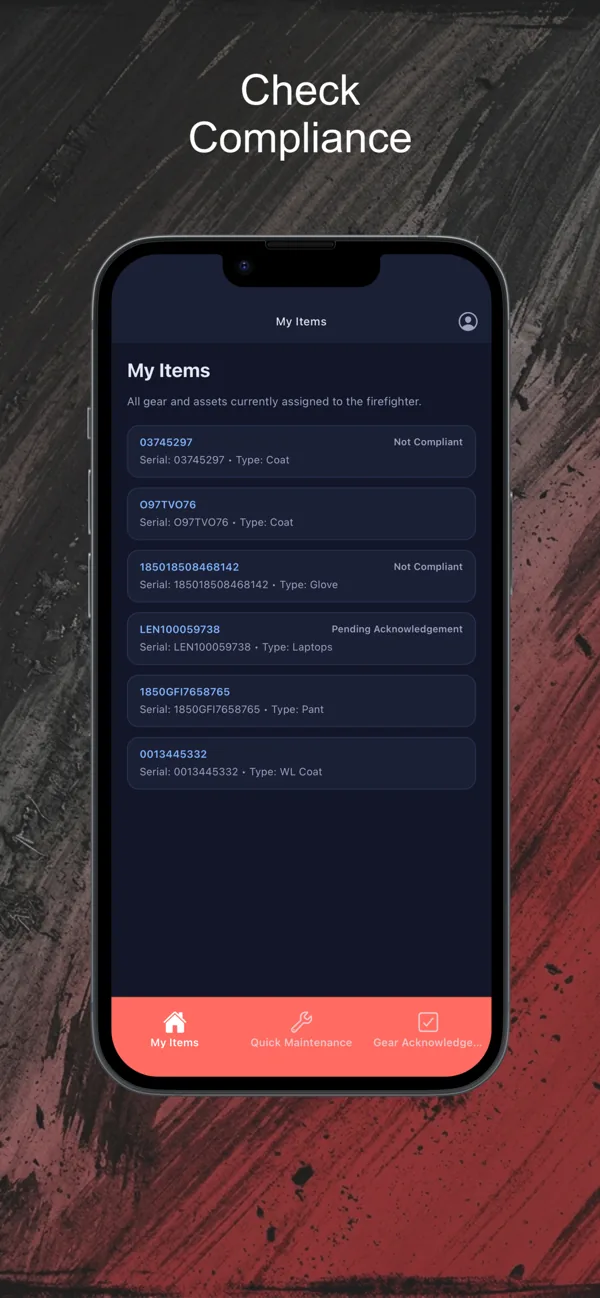
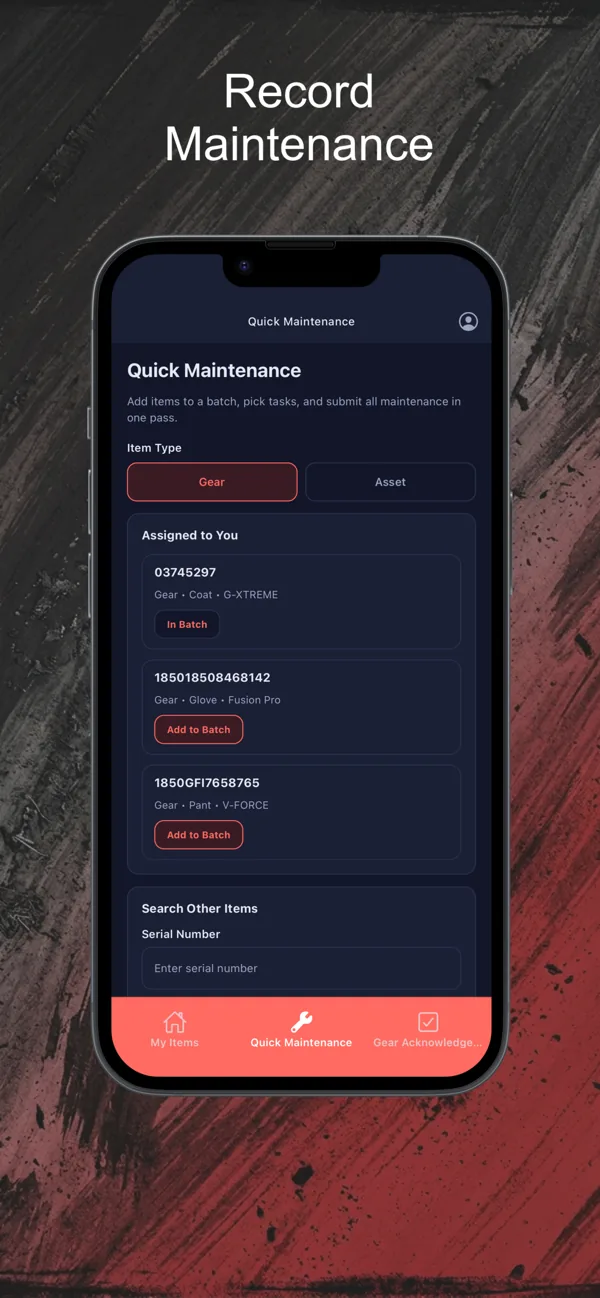
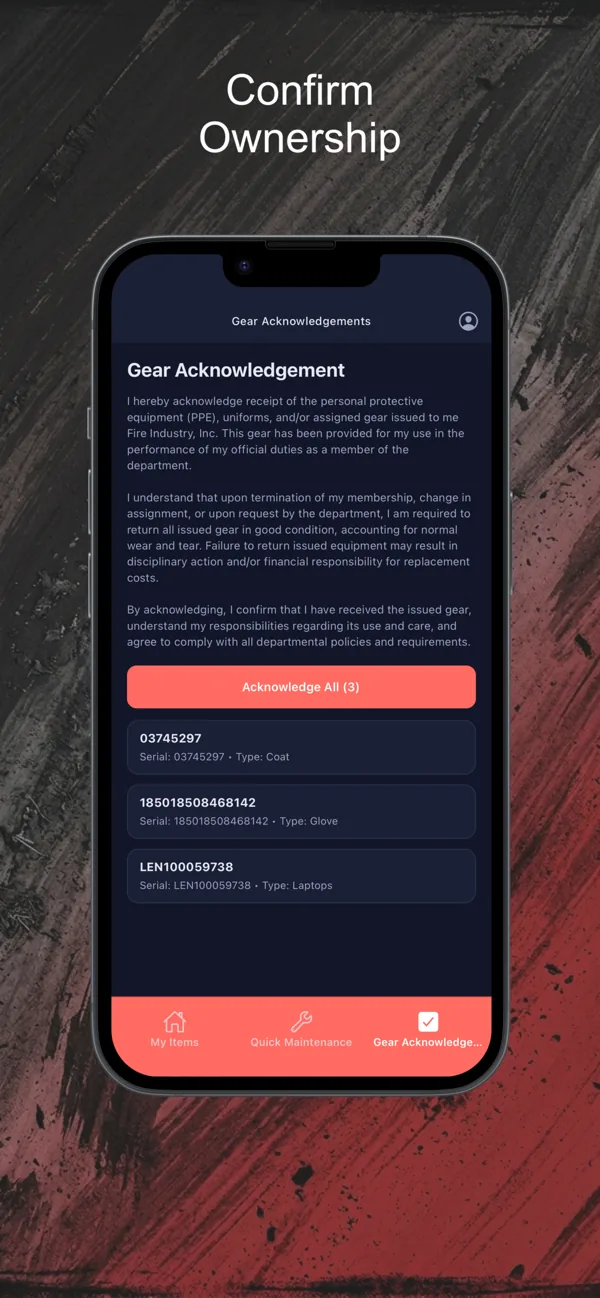
A mobile app covers the three things that happen on the floor: find the item, log the inspection or maintenance, and acknowledge the result. It works with the web suite, not beside it.
- 04
Role-based access and an audit trail by default
Access is scoped per department and per role. Every status change is recorded with the actor and timestamp, and the trail is a report an auditor can be handed, not a log an engineer has to pull.
- 05
Dashboards that answer the budget question
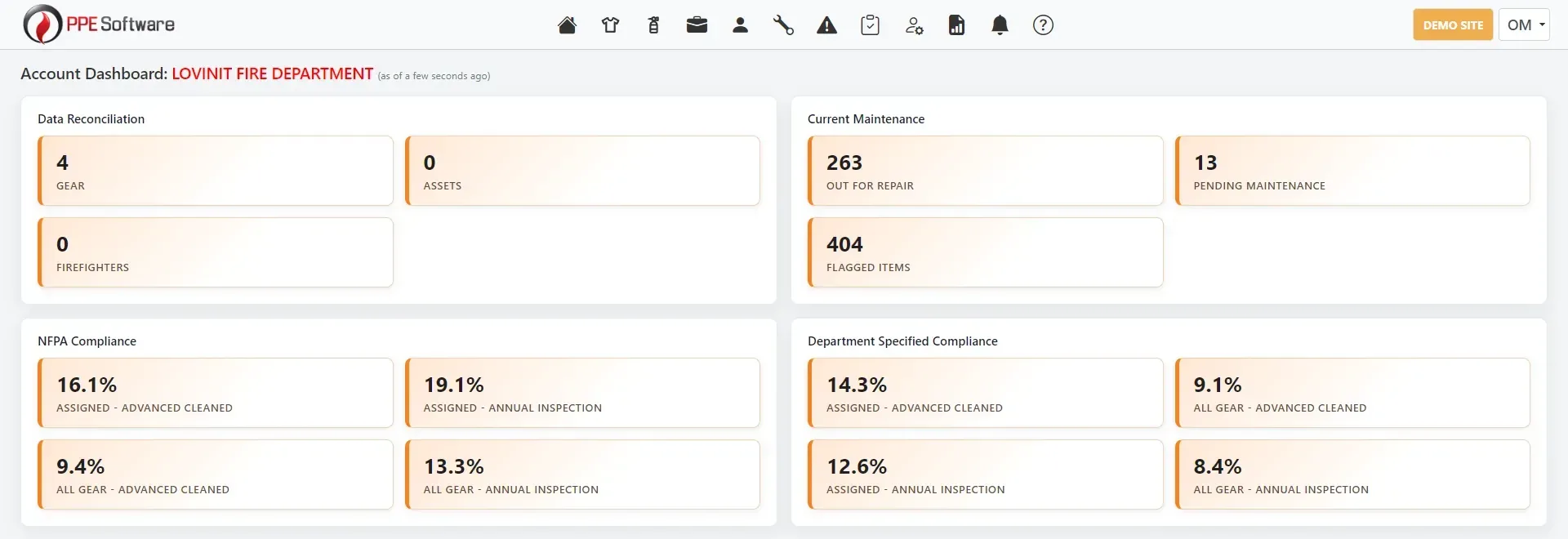
The dashboard reports compliance rates and the value of tracked gear per department, so a chief can see what is due, what is out of service, and what replacement will cost.
04Architecture
05Screens
The dashboard is the first thing a chief sees. The mobile screens are what a quartermaster uses on the floor.
06Outcome
More than 15 fire departments run on the platform. Dashboards report on millions of dollars of tracked gear. Inspections are logged where they happen, alerts fire before equipment falls out of compliance, and the audit trail with role-based access is what department auditors are handed.
The product is live at app.ppesoftware.com (opens in a new tab). Bermudez Systems continues to develop it.